Intersection of Quantum and Neuroscience: Designing Ethical Defense Applications
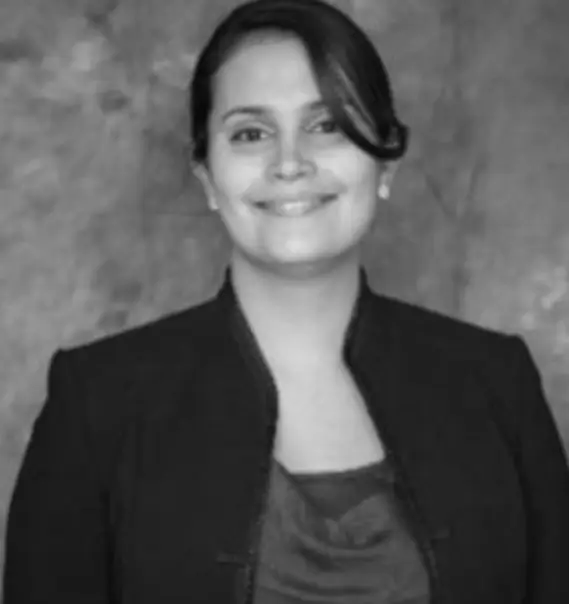
Nydia Assaf Aragon
Quantum and Neuroscience:
EnLuz founder and international speaker, Nydia provides strategic advisory in data science, AI/ML, quantum computing, neuroscience, and IT risk & security. She leads Global Quantum and AI Literacy programs with a focus on accessibility and economic development. Her firm provides strategic advisory and consulting. Nydia’s team was a finalist in the 2025 Global Industry Challenge (NeuroQuantum Nexus), announced at the Quantum World Congress and hosted by Connected DMV. In 2024, she was also a finalist in a Global Climate Challenge, which led to a Quantum Fellowship sponsored by the U.S. Navy Nuclear Laboratory, culminating in a materials discovery publication presented at Fall TMS 2025.
She was named one of SAS’s “Top Women in Analytics” (2021), nominated for the ATHENA Leadership Award (2022), and recognized with MetLife’s Center Stage Award (Q2 2018) for her digital transformation and compliance impact. In 2025, she was nominated for the “Quantum 100” award, aligned with UNESCO’s International Year of Quantum Science & Information, recognizing leadership in the global quantum ecosystem.
With a background in electronic engineering and psych neuroscience, Nydia previously served as Global Principal for IT Risk & Security, where she advanced security posture maturity, developed metrics frameworks, optimized tooling spend, and co-led board-level security posture reporting for a Fortune 40 Fintech. She is passionate about demystifying deep tech and building bridges between cybersecurity, AI, and quantum for real-world impact
Watch this full lecture and over 100 other expert lectures on Quantum Technologies in our community with a single subscription.
EnLuz is committed to technology & wellness accessibility. We believe that knowledge can empower individuals & become a differentiator for generational wealth & health. Learn practical ways to apply niche technology before it becomes part of the hype!




















The Brain, the Battlefield and the Quantum Leap: Ethical Quantum Neuroscience with Nydia Assaf Aragon
Imagine a helmet that acts as a co-pilot for the brain - detecting trauma, monitoring cognitive load and quietly signalling when judgement is impaired. This is the emerging landscape of quantum neuroscience. Guiding the way is Nydia Assaf Aragon, founder of NLUSE and an adviser at the intersection of quantum, AI and neuroscience.
In her recent talk, Designing Ethical Defence Applications, Nydia outlined how quantum technologies - particularly diamond nitrogen vacancy (NV) centre sensors - could transform brain health, battlefield medicine and national security. The vision blends scientific ambition with public health pragmatism, with ethics designed in from the start.
From MRI to quantum: why speed and precision matter
Conventional imaging tools such as MRI and CT are slow, bulky and often inadequate in high-stakes settings like battlefields or emergency departments. The gap between the speed of injury and the speed of diagnosis can determine outcomes. Quantum sensors promise rapid, molecular-level detection of concussion, inflammation and haemorrhage with exceptional accuracy. Crucially, diamond NV sensors are moving from cryogenic to room-temperature operation - enabling integration into helmets, medical devices and potentially wearables.
Quantum sensors and the neural code
Modern neuroscience maps brain regions linked to perception and stress, yet the encoding of thoughts remains opaque. Nydia draws a useful analogy between lattice-based post-quantum cryptography and neural pathways. If we learn to interpret the brain’s own encoding, we may detect conditions such as Alzheimer’s earlier and protect cognitive privacy alike. The prospect sharpens ethical questions about ownership and safekeeping of thought data.
Why diamond NV sensors matter
Diamond NV centres are microscopic defects in diamond that are exquisitely sensitive to magnetic and electric fields, temperature and pressure. In neuro-applications, they can register subtle shifts in the brain’s electromagnetic environment, enabling:
Real-time assessment of brain injury in the field
Monitoring of PTSD risk and cognitive load in soldiers
Early detection of neurodegenerative disease
Biomarker tracking at single-cell resolution
Nydia also points to near-term possibilities such as measuring cellular bioenergetics and embedding sensors in surgical implants to monitor recovery. She has proposed an XPRIZE concept around these capabilities.
Ethics at the edge
If thoughts can be inferred, they can be misused. Nydia returns repeatedly to the risk of misinterpretation, profiling and intrusive surveillance. Her position is practical: build policy with action. That means diverse datasets, neurotypical and neurodivergent baselines, rigorous validation and governance frameworks that treat neural data with the same care as financial records or encryption keys.
Key takeaways
Quantum plus neuroscience is enabling precision medicine - from real-time trauma tracking to earlier intervention.
Diamond NV sensors are moving beyond the lab to rugged, room-temperature devices.
Dual-use is the norm - the helmet that aids soldiers could protect civilians in crashes or sport.
Data privacy for neural signals is non-negotiable and must be governed to cryptographic standards.
Hybrid systems are the realistic near term - quantum sensors fused with AI and classical analytics to inform human decision-makers.
Market classification
Primary: Quantum healthcare technology and neuro-sensing devices
Sub-markets and adjacent domains:
Quantum sensing
Medical diagnostics
Defence technology
Wearable neurotechnology
PTSD and mental health monitoring
Neurodegenerative disease prevention
Competitor categories:
Classical EEG and fMRI firms such as GE and Siemens
Quantum sensor start-ups such as Qnami and QDTI
Defence health-tech platforms, including DARPA-funded projects
Wearable biotech innovators such as Neuralink and Emotiv
Market outlook
The convergence of quantum sensors, AI-driven diagnostics and neuroscience is opening a frontier exceeding £30 billion, spanning civilian healthcare, defence trauma response and mental performance optimisation. The shift from lab-bound equipment to field-ready devices signals strong commercial momentum.
Demand drivers
Rising prevalence of neurodegenerative and mental health conditions
Need for rapid trauma detection in high-risk occupations
Military R&D investment in real-time battlefield diagnostics
Ethical AI and sensor fusion requirements for safe hybrid systems