Top 10 Innovations in Quantum Key Distribution (QKD) for Advanced Security
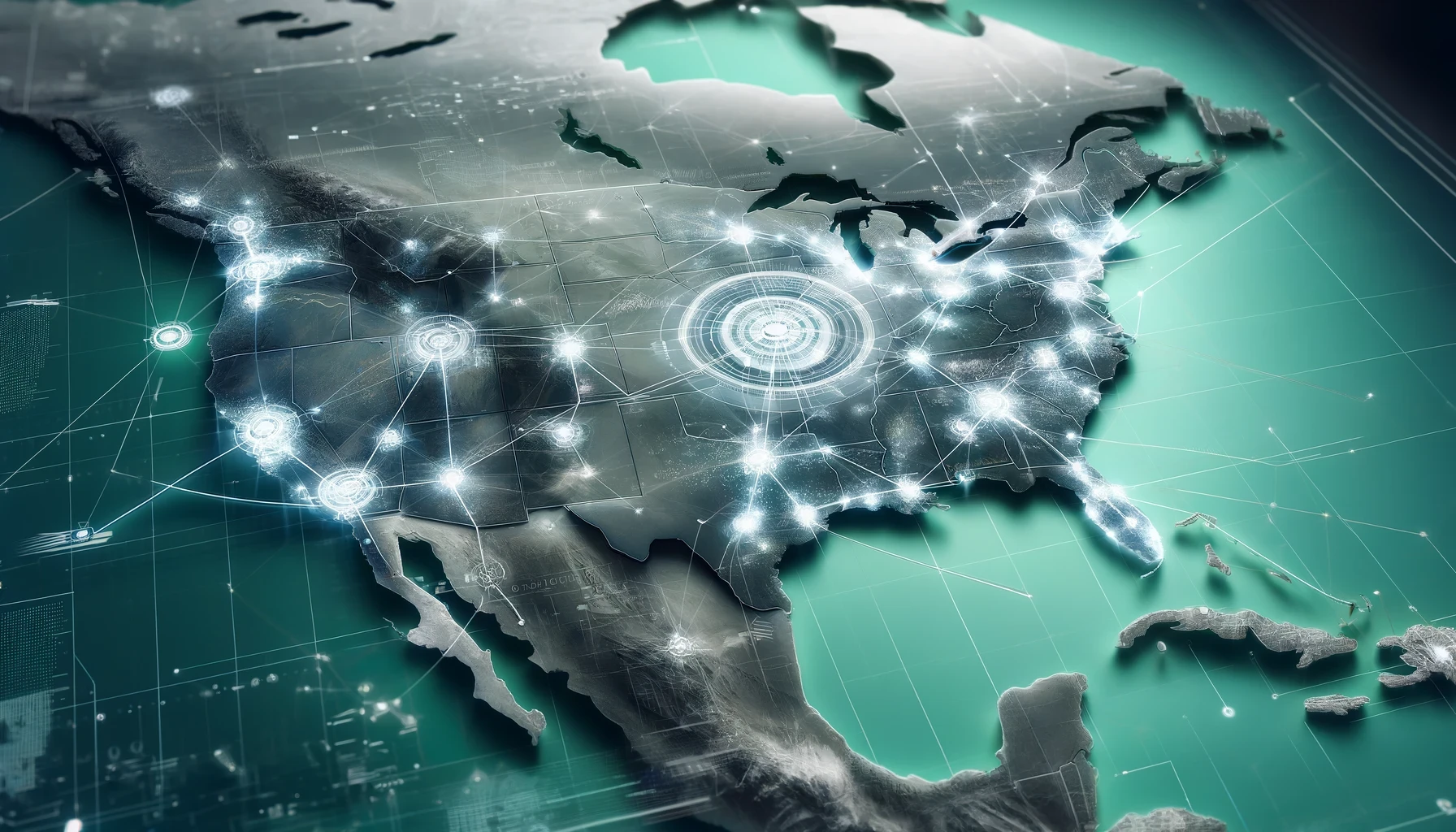
Quantum key distribution (QKD) is a secure communication process that involves the exchange of encryption keys between two particles within a quantum state in a safe and guaranteed environment. This can enable the encryption (securing) and description (revealing) of messages shared between those two particles.
Top 10 Innovations in Quantum Key Distribution (QKD)
There have been various applications of quantum key distribution that are expected to ignite the quantum computing era. The following innovations are key emerging areas to look at when considering the applications of QKD.
Metropolitan Quantum Networks
Quantum key distribution according to this research published on nature quantum information can be applied to metropolitan communication systems as fiber infrastructure may only sometimes be in place. In this case, an entanglement-based free-space quantum network was deployed to showcase its applications in realistic scenarios. The expectation is that this work will establish free-space networks as a viable solution for metropolitan applications and an indispensable complementary building block in the future global quantum internet.
Ultra-Low-Loss Fiber Technology
Some researchers presented a paper on the application of QKD in ultra-low-loss fiber technology at the Optical Fiber Communication Conference where they used a 2.5 GHz clocked quantum key distribution system to perform long-distance and high-speed quantum key distribution. By leveraging superconducting detectors optimized for each operation regime and low-loss fiber, they achieve state-of-the-art performance.
Quantum Random Number Generation (QRNG)
Quantum random number generators (QRNGs) represent a unique subset of TRNGs using QKD to produce randomness through the measurement of inherently non-deterministic quantum phenomena. This approach offers several benefits, such as tapping into quantum indeterminacy for enhanced unpredictability, leveraging photonics for accelerated performance, and crucially, providing a means to comprehend and authenticate the source of unpredictability, thereby bolstering the foundational security of the entire cybersecurity infrastructure.
Quantum-Safe Cryptography
Quantum-safe cryptography provides a higher level of security where public-key cryptography which is widely used today will be broken when used for quantum computers. It refers to the identification of algorithms that are resistant to attacks by classical and quantum computers, to keep information secure even after the widespread adoption of large-scale quantum computers.
Digital Post-Quantum Signature
Digital post-quantum signature deals with the authentication of identity via digital protocols that will work seamlessly with quantum computers by not breaking and making the system vulnerable to attacks. Current authentication protocols are not able to handle the proof of identity on quantum computers.
Twin Field QKD
The dual-band phase estimation is an innovation used in twin-field QKD that helps avoid noise from spontaneous Raman scattering, further reducing system noise and enhancing QKD reliability , especially for securing information over long distances.
QKD in Cloud Computing and Data Centers
Cloud computing has become the traditional way of many data for many software applications globally and with that comes the protection of sensitive data. Now, with quantum computers coming into the mix, the protection protocols will no longer withstand attacks as quantum computations will easily break through and make data vulnerable. In this research by Dr. S. Rajendirakumar, QKD protocol was used to establish a shared secret key between the cloud server and the client. This key is then used to encrypt the data before it is sent to the cloud server.
Quantum Memory Integration
Quantum memories enable information storage during transmission across quantum channels. On entanglement-based quantum networks, information is secure but transmitting it can be a challenge as it may lose usefulness as it moves along the channels of distribution. QKD enhances the delivery of this information and ensures that is intact from the point of information generation to transmission
Quantum Repeaters
Quantum repeaters greatly extend the range of this Wide Area Network, allowing data centers to be situated farther apart while still transmitting the same quantum information point-to-point over long distances, thus overcoming the limitations of quantum signal loss. Their function is enhanced by QKD to ensure network integrity.
Quantum Commitment
A commitment scheme enables a party to commit to a specific value in a way that prevents the sender from altering it and keeps the recipient from learning the value until it is revealed by the sender. These schemes are frequently employed in cryptographic protocols such as quantum coin flipping, zero-knowledge proofs, secure two-party computation, and oblivious transfer.
22.05.2024
Want to build Quantum Capability?
Become a member today!

Membership Packages.
*student access available here
Expert Vendor Membership
$399 per month
Designated 10hrs advisory
Business amplification
10 user access licence
Dedicated client manager
Informal Peer Review
Membership press release
Partnership Introductions
Collaboration opportunities
Contact Us
Lifetime Individual Membership
$149 Lifetime
Free Webinar Events
80 Hours of Quantum Education
Quantum Cybersecurity Certificate
Quantum Blockchain Certificate
Members only events
Executive training discounts
Events Discounts
Priority QSECDEF 2026
Newsletter & Community
Limited Time Offer 2026 Only
Sign Up
Enterprise Up-skilling Per 10 Users
$499 per year
Access all training & Lectures
10 users access licence
Workforce certifications
Discounts on events
Weekly events attendance
Sign Up